Biological classification
👋 Greetings, Jalaj Singhal here!
🚀 I'm an enthusiastic blogger who enjoys delving into the world of technology and imparting my knowledge to the community.
📃 Having experience in HTML and CSS, I enjoy creating interesting and educational content that demystifies difficult ideas and gives readers the tools they need to advance their knowledge.
🌐 I try to contribute to the active tech community and encourage relevant discussions on Hash Node, where you can find my writings on the subject of web development.
💡 Together, let's connect and go out on this fascinating path of invention and learning!
Biological classification
In Linnaeus time, a two-king system of classification with Plantae and Animalia kingdoms was developed that included all plants and animals, respectively.
This system did not distinguish between eukaryotes and prokaryotes, unicellular and multicellular organisms, and photosynthetic (green algae) and non-photosynthetic (fungi) organisms.
The classification of organisms into plants and animals was easily done, but a large number of organisms do not fall into either category.
The two-kingdom classification used for a long time was found inadequate.
The classification systems for living organisms have, therefore, undergone several changes over time.
The understanding of what organisms should be included in these kingdoms has been changing from time to time.
R.H. Whittaker (1969) proposed a five-kingdom classification...
Monera
Protista
Fungi
Plantae
Animalia
His primary classification criteria consist of...
Cell structure
Body organization
Mode of nutrition
Reproduction
Phylogenetic Relationships
| Five Kingdom Classification by Whittaker | |||||
| Attributes | Monera | Protista | Fungi | Plantae | Animalia |
| Cell type | Prokaryotic | Eukaryotic | Eukaryotic | Eukaryotic | Eukaryotic |
| Cell wall | Polysaccharides and amino acids. | May be present. | Chitin | Cellulose | Absent |
| Organ complexity | unicellular | Unicellular | Multicellular | Multicellular | Multicellular |
| Mode of Nutrition | ChemosyntheticAutotrophic/ heterotrophic | Autotrophic/ heterotrophic | Heterotrophic Absorption | Autotrophic | Heterotrophic Holozoic |
1. Monera
This group includes all kinds of bacteria that have a prokaryotic cell.
The cell does not contain a well-defined nucleus.
There are different shapes of bacteria present: spherical ,cocci, rod-shaped bacillus, comma-vibrio, and spiral-spirilla.

They mainly reproduce by fission, spore formation under unfavorable conditions, and also by DNA transfer from one bacterium cell to another.
Mycoplasma lack the cell wall and are the smallest cell to survive without oxygen.
Archaebacteria: These bacteria are present in the harshest environmental conditions, such as salty, marshy, and hot springs. They are known as halophiles, methanogens, and thermoacidophiles, respectively.
Methanogens are present in the guts of ruminants and produce biogas.
Eubacteria: These are true bacteria and have a rigid cell wall, and motile organisms have flagella.
Photosynthetic Autotrophs: They include Cyanobacteria (blue-green algae). They have chlorophylls and carotenoids. They are unicellular, filamentous, or colonial, and they are covered by a mucilaginous sheath. Nostoc and Anabaena have heterocyst's where they can fix atmospheric nitrogen.
Chemosynthetic autotrophs play an important role in recycling nutrients. They get the required energy for ATP generation from the oxidation of various inorganic substances such as ammonia, nitrates, and nitrites.
Heterotrophic: There is a wide variety of heterotrophic bacteria. They act as decomposers. They are used for various purposes, such as nitrogen fixation, curd production, and antibiotic production. Many bacteria are pathogens causing various diseases in plants and animals, e.g., citrus canker, tetanus, typhoid, and cholera.
2. Protista
The group includes unicellular eukaryotes.
A photosynthetic protist is a link between plants and animals.
They contain a well-defined nucleus and other membrane-bound cell organelles.
They include protozoa, slime moulds, chrysophytes, dinoflagellates, and euglenoids.
Chrysophytes:
Include diatoms and desmids (golden algae).
They are mostly photosynthetic and have an indestructible cell wall due to the presence of silica.
The cell wall makes two thin, overlapping shells, which fit like a soapbox on the outer surface.
Diatomaceous earth is the deposit of the cell wall that gets accumulated. It is used for filtration and polishing.
Dinoflagellates
They are photosynthetic and marine.
They are found in many colors, like yellow, green, red, blue, and brown, according to the pigment present.
Stiff cellulose plates are present on the cell wall.
They multiply rapidly and cause a red tide.
Many dinoflagellates emit blue-green light and are bioluminescent.
Euglenoids
They are photosynthetic flagellated protists.
They are a link between plants and animals. They perform photosynthesis but lack a cell wall.
The characteristic feature is the presence of a pellicle, a protein-rich layer, which makes their body flexible.
In the absence of sunlight, they feed on small organisms and behave as heterotrophs.
Slime Moulds:
They are saprophytic protists, feeding on organic materials from decaying twigs and leaves.
The aggregation of slime moulds is called plasmodium, which they form under favorable conditions.
Under unfavorable conditions, fruiting bodies containing spores develop at the tip of the plasmodium.
These spores can survive for very long under adverse conditions and have true walls.
Protozoans:
The group contains all the unicellular, eukaryotic, heterotrophs, which are parasites or predators.
These are divided into four major groups:
Amoeboid: They are characterized by the presence of pseudopodia, which are used for movement and catching of prey, e.g., Amoeba. Marine amoeboids have silica shells. Some of the amoeboid are parasites, e.g.,. Entamoeba histolytica causes amoebic dysentery.
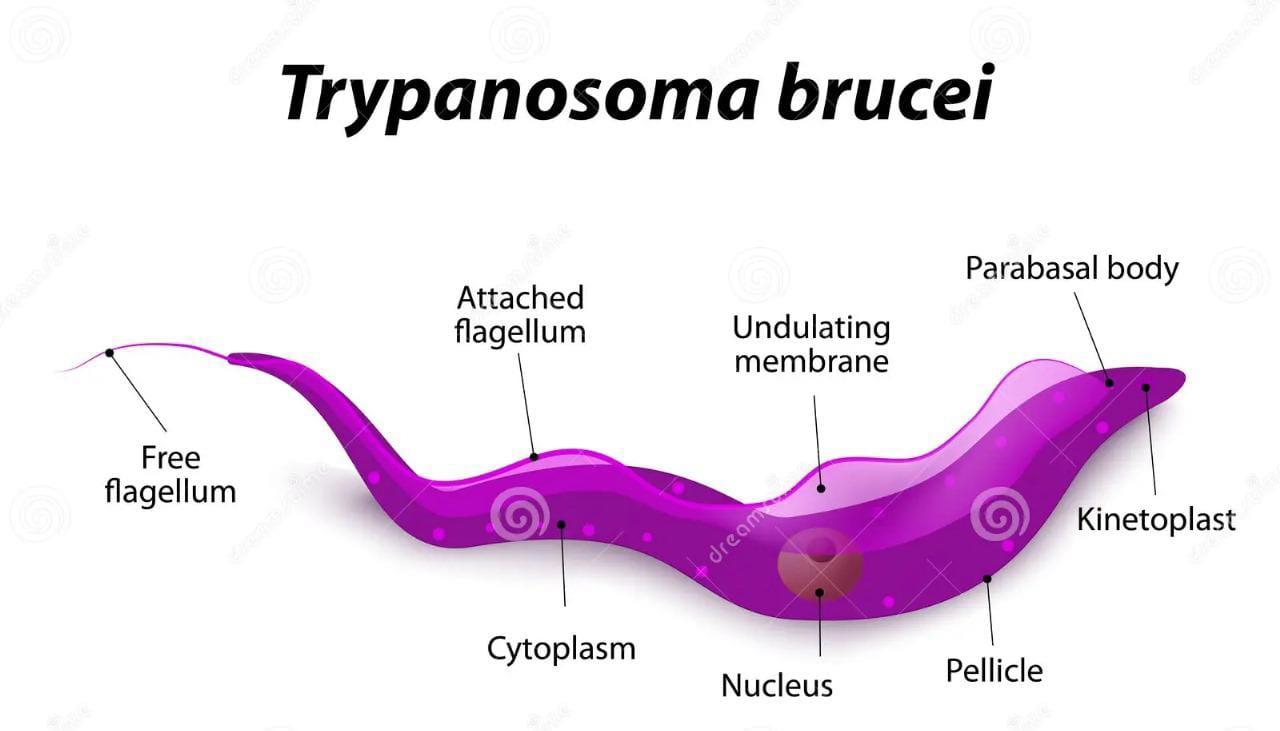
Flagellated: They are characterized by the presence of flagella. Some of them are parasites causing various diseases, e.g., trypanosoma causes sleeping sickness.
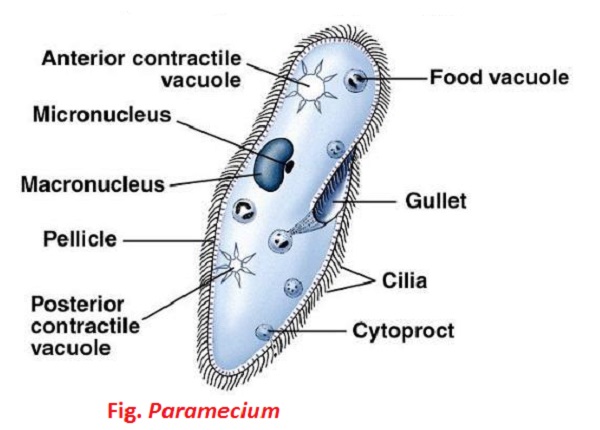
Ciliated: They have thousands of cilia on their body surface. The coordinated movement of cilia helps in steering the water having food into the gullet (body cavity, which opens outside the body surface), e.g., Paramecium.
Sporozoans: They are characterized by the formation of spores, which is the infectious stage, e.g., Plasmodium.
3. Fungi
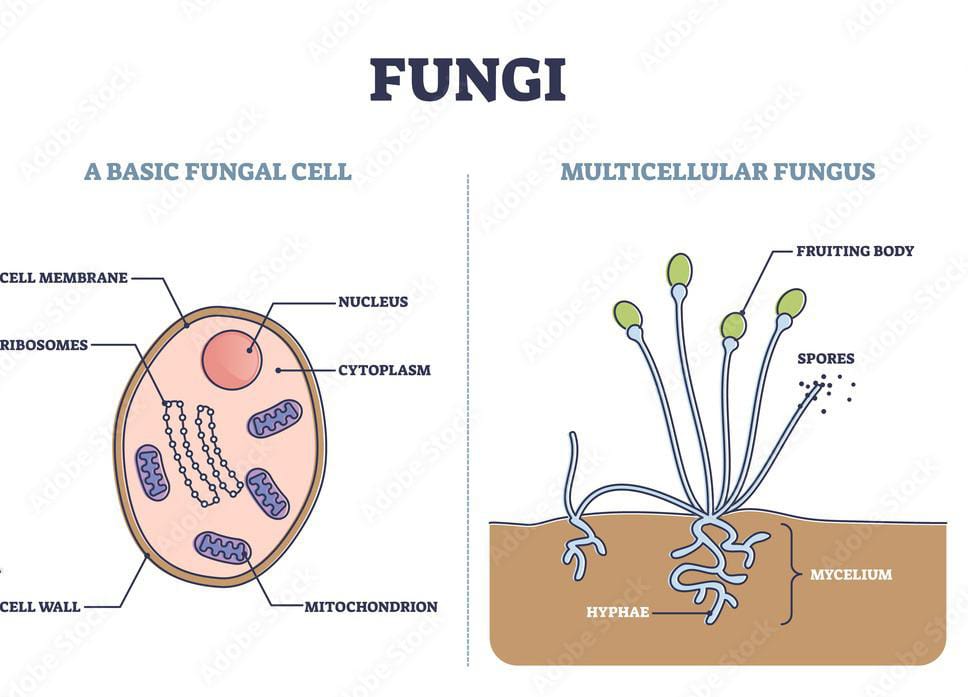
Fungi are cosmopolitan and found everywhere.
They are heterotrophic and get nutrients through absorption.
Their cell wall is made up of chitin or fungal cellulose.
Their mode of nutrition is saprophytic, parasitic, or symbiotic, and their main food reserve is glycogen.
Vegetative reproduction occurs by fragmentation, budding, or fission.
Asexual reproduction is achieved by spores' formation, such as conidia, zoospores, and sporangiospores.
Sexual reproduction occurs through oospore, ascospore, or basidiospore formation in distinct fruiting bodies.
In sexual reproduction, plasmogamy (fusion of protoplasm) is followed by karyogamy (fusion of nuclei).
In basidiomycetes and ascomycetes, plasmogamy is not immediately followed by karyogamy, resulting in a distinct dikaryon (n+n) cell having 2 nuclei per cell.
Fungi are divided into four major classes on the basis of the types and modes of spore formation and the structure of mycelium.
| Attributes | Fungi | |||
| Class | Phycomycetes | Ascomycetes | Basidiomycetes | Deuteromycetes |
| Habit and habitat | Moist damp areas or an obligate parasite on plants | Saprophytic, coprophilous, parasitic, and decomposers | Found in soil, logs or as a parasite in plant bodies, causing rust and smuts | Saprophyte, parasite or decomposers help in mineral recycling |
| Structure of mycelium | Aseptate, coenocytic | Branched, septate | Branched, septate | Branched, septate |
| Asexual Reproduction | Zoospores (motile)Aplanospores (non-motile) | Conidia (formed exogenously in conidiophores) | Vegetative reproduction is by fragmentation; there is no asexual spore formation | conidia |
| Sexual Reproduction | Isogamous, anisogamous or oogamousZygospores | Ascospores (formed endogenously in asci) | No sexual organs, basidiospores, are formed in the basidium Karyogamy after dikaryon phase | Imperfect fungi, sexual reproduction is not found |
| Examples | Mucor, Rhizopus, and Albugo | Commonly known as sac-fungi.Penicillium, Aspergillus, Neurospora, Claviceps, and yeast (unicellular) | Commonly known as mushroom, bracket fungi, or puffballs, Agaricus, Ustilago, and Puccinia | Trichoderma, Colletotrichum, Alternaria |
Some important fungi:
Yeast is used in fermentation to make cheese, bread, and beer.
Penicillium is an antibiotic source.
Puccinia causes wheat rust.
Ustilago causes smut disease.
Symbionts: Lichens (symbiotic association of fungi with algae), Mycorrhiza (symbiotic association of fungi with roots of green plants).
Rhizopus is the bread mould.
Albugo is the parasitic fungus on mustard.
Neurospora is extensively used in genetic and biochemical work.
Truffles and morels are edible and considered a delicacy.
Agaricus: edible as well as poisonous species.
4. Plantae
Mostly autotrophic, chlorophyll-containing, eukaryotic organisms.
Characterized by the presence of a rigid cell wall made up of cellulose.
Some plants are partially heterotrophic, such as insectivorous (Venus flytrap, Bladderwort) and parasites (Cuscuta).
Kingdom Plantae includes Algae, Bryophytes, Pteridophytes, Gymnosperms, and Angiosperms.

5. Animalia
All the heterotrophic, eukaryotic and multicellular organisms are included in the Kingdom Animalia
They lack a cell wall.

Some of the acellular organisms and lichens that are not classified in the five-kingdom classification by Whittaker are the following:
Viruses:
Dmitri Ivanowsky gave the name “virus” to the causal organism of tobacco mosaic disease (TMV)
Beijerinek called the fluid extracted from diseased tobacco plants “Contagium vivum fluidum” and observed it as being infectious to healthy plants
Stanley crystallized TMV (tobacco mosaic virus) for the first time
They are acellular, containing a nucleic acid core (either DNA or RNA), which is surrounded by a protein coat called the capsid.
Viruses use the host machinery to multiply inside the host cell; they exist in a crystalline form outside the host cell.
They are obligate parasite and cause various diseases in plants and animals, e.g. common cold, AIDS, polio, mumps, measles, chickenpox, etc. in animals and various mosaic diseases in plants such as tobacco, cucumber, tomato, etc. leaf curling, yellowing of vein, etc.
Viruses that infect plants have single-stranded RNA.
Bacteriophages and viruses infecting bacteria have double-stranded DNA.

Viroid's:
They are the smallest infectious agents found. They consist of nucleic acid but lack a protein coat.
Diener discovered viroid's as a causative agent of potato spindle tuber disease; that was free RNA.

Prions:
They contain abnormally folded proteins and have a size similar to viruses.
They can change the shape of normal proteins by transmitting their misfolded proteins.
They cause many neurodegenerative diseases, e.g., bovine spongiform encephalopathy (BSE) in cattle and Cr-Jacob disease in humans.
Lichens:
They are a symbiotic, mutually beneficial association of algae (phycobiont) and fungi (mycobiont). The alga is autotrophic and provides food, whereas the fungus provides protection and shelter.
Lichens do not grow in polluted areas, so they are a good pollution indicator.
